

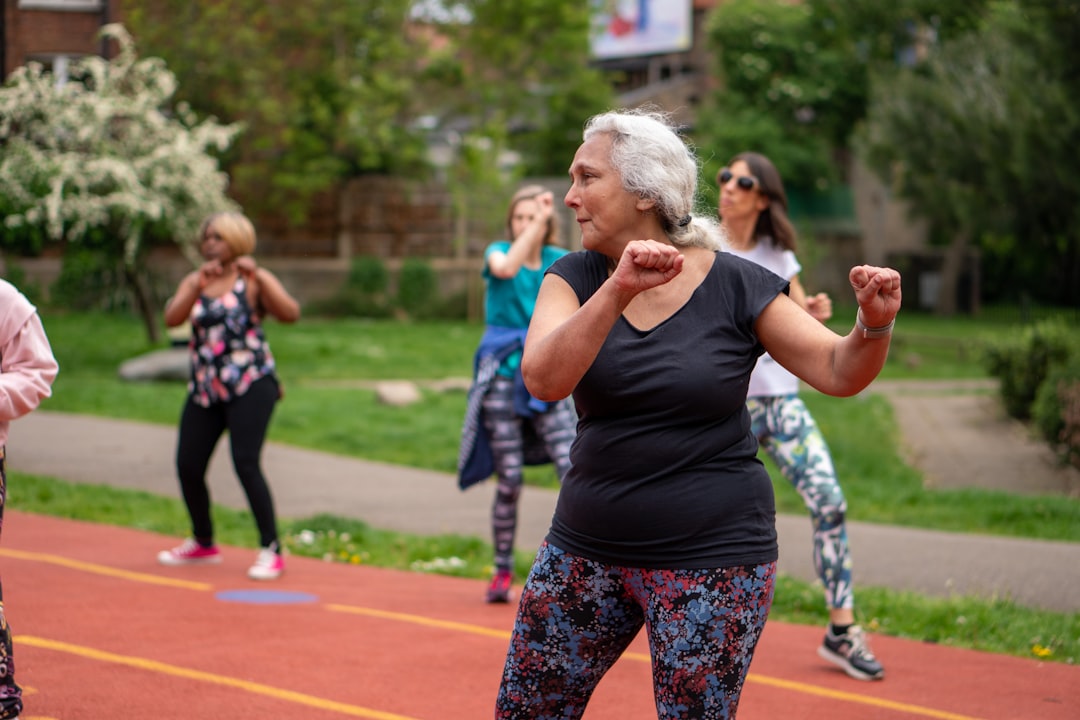
You already know cardio is good for your heart. You probably know strength training helps hold on to muscle and bone. But here is one most of us overlook: balance.
Balance naturally decreases as we get older. And that matters more than many people realize. According to the World Health Organization, 684,000 fatal falls happen every year worldwide. Falls are the second leading cause of unintentional injury death, after road traffic accidents.
The good news is that balance is something you can work on. And it does not take long.
Why Balance Gets Harder With Age
Dr. Milica McDowell, a doctor of physical therapy and exercise physiologist at US Physical Therapy, explains that balance draws on three systems working together: your inner ear, your vision, and the tiny receptors in your feet, joints, and tendons. All three become less sensitive as we age.
Harry Cox, a certified personal trainer and founder of ClubQ, puts it plainly.
“As we get older, several of the systems that contribute to balance deteriorate: our sight worsens, muscle strength decreases and we become less able to sense where our body is in space. On top of that, our brain’s ability to combine all this information worsens, increasing the risk of balance-related injuries.”
Cox adds that good balance is one of the keys to feeling sturdy and capable in your own body. Without it, he says, your risk of a fall-related injury goes up — and keeps going up the older you get.
The 5 Best Exercises for Better Balance
Here are five exercises recommended by Dr. McDowell and Cox. You do not need a gym, and most of them take just a few minutes.
1. Standing With Your Eyes Closed
Dr. McDowell recommends this one first. When you close your eyes while standing, you remove your visual input and force your other balance systems to kick in. You will notice a slight rocking — side to side or front to back. That is called body sway, and it is completely normal. It is your body making small corrections to keep you upright.
She suggests doing this barefoot, holding a counter or railing if needed. Stand with your feet hip-width apart, close your eyes, and let go of the counter when you feel safe. Hold for 30 seconds to one minute.
2. Heel-to-Toe Standing
Dr. McDowell calls this a tandem stance. You stand with one foot directly in front of the other, heel touching toes, like walking a tightrope. By narrowing your base of support, you challenge your balance in a new way. She describes it as a “novel task” — something fresh that your body has to figure out.
Stand upright, hold a railing at first, then place one foot directly in front of the other. Engage your core, keep your knees slightly soft, and hold for 30 seconds to one minute. Then switch which foot is in front.
3. Toe Lift, Spread, and Reach
This one surprises people because you do it while seated. Dr. McDowell says it strengthens the tiny muscles in your feet and improves the brain-body connection at the foot level. She calls it a balance-boosting exercise.
Sit with bare feet flat on the floor. Lift all your toes off the ground while keeping your heels down. Spread your toes as wide as you can, then set them back down. Repeat for one minute.
4. Standing on One Leg
Cox calls this his favorite balance exercise. The beauty of it is how flexible it is. Struggling to stay up? Hold a chair or wall. Feeling steady? Let go. Getting comfortable with that? Add movement — slowly swing the raised leg forward and backward. Ready for a real challenge? Close your eyes while you do it.
Lift one leg slowly off the floor and hold for 30 seconds to one minute. Then switch legs. Use whatever level of support you need. The goal is to keep progressing over time.
5. Step-Ups
Cox recommends stepping up and down on a step-up bench — or simply going up and down a flight of stairs — without holding on to anything. He says this builds both balance and leg strength at the same time.
Stand behind the step, then step up with one foot, followed by the other. Step back down. Alternate which leg leads with each rep. Continue for one minute.
How Often Should You Do These?
Dr. McDowell recommends doing balance exercises every single day. That sounds like a big commitment, but she says just five to ten minutes a day is enough to make a real difference.
Cox echoes that consistency is the key.
“You can’t expect to do balance exercises for six weeks and then never need to worry about your balance again; you either use it or you lose it. That’s why making it a consistent habit is far more important than having an all-or-nothing approach.”
Two More Tips Worth Knowing
Dr. McDowell suggests doing these exercises barefoot whenever possible. Shoes and socks create distance between your foot and the floor, which makes it harder for the receptors in your feet to send good signals to your brain. The closer your bare foot is to the ground, the better your balance feedback.
Cox also points out that strength training matters alongside balance work. Balance training helps your body react to instability. But you still need enough leg strength to actually catch yourself. The two work together.
Losing your balance as you get older is not a given. It just takes a little daily attention. Five to ten minutes. Bare feet. A counter nearby if you need it. That is really all it takes to start.